


Sherried whisky. It evokes a sense of taste, time, and style of whisky that is hugely desirable to whisky lovers, so let’s dig a bit deeper on sherry casks, and how they work.
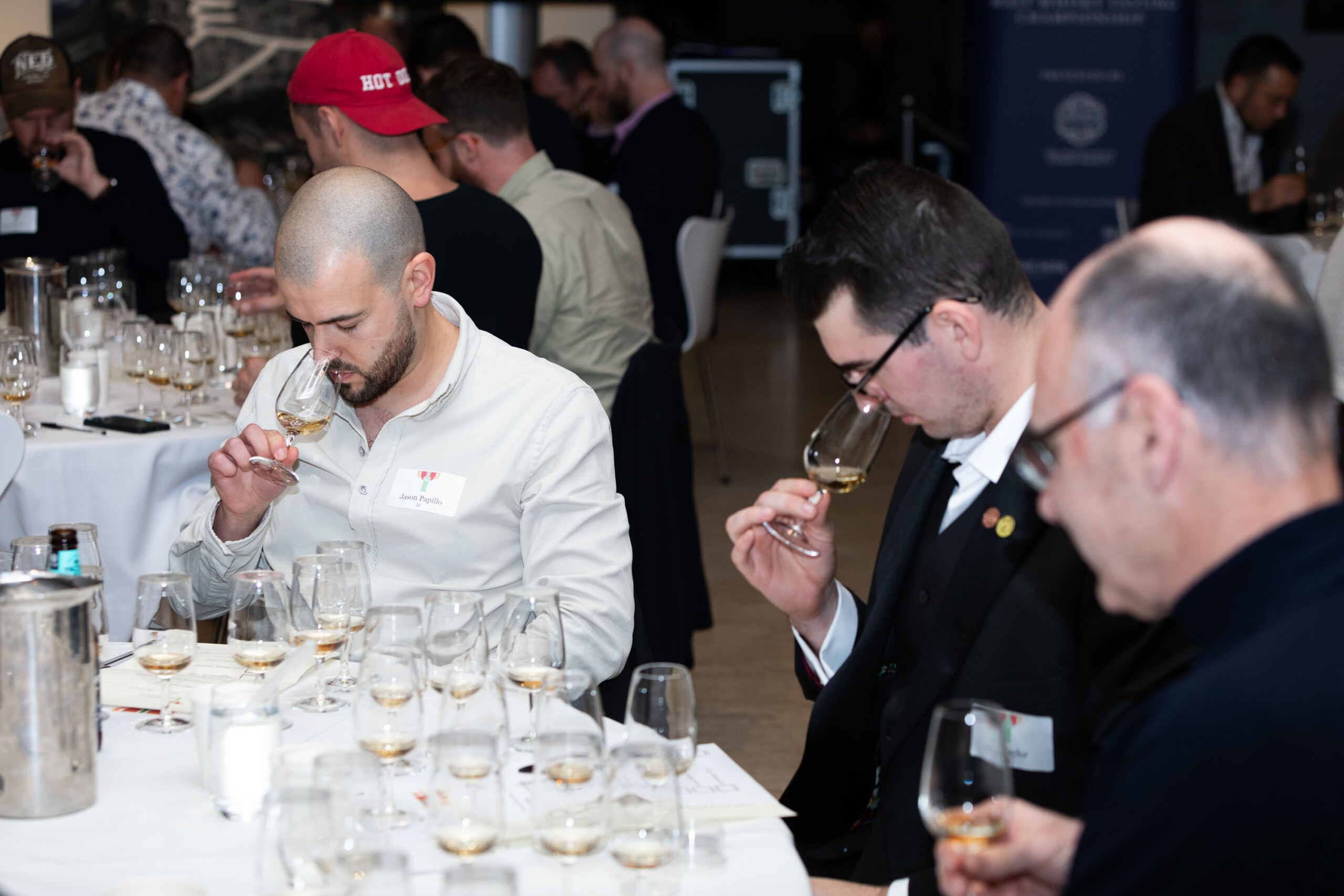
Simply put, sherry casks are desirable, but sherry isn’t. I often like asking a room full of members “who here drinks sherry” and in a room of 40+ guests, I’ll see barely 1 or 2 hands go up. Those who do throw their hands up are usually super enthusiastic sherry drinkers who obsess over obscure sherries and styles, but that’s it. It’s not regularly reached-for on the shelf like wine or whisky is. I think we should all drink more sherry: not necessarily for the casks, but because it’s bloody delicious!
But how did we get to this point? Let’s rewind a bit. If people aren’t drinking sherry, then where are the sherry casks coming from?
Sherry casks are supposed to all come from the legendary ‘sherry triangle’ in southwestern Spain, between Jerez de la Frontera, Sanlúcar de Barrameda, and El Puerto de Santa María in the province of Cádiz. This region is best known for producing sherries in the solera process, which uses fractional blending of new and old sherries in a series of triangular-stacked barrels. Everything changed in 1986 when a new law came in banning the export of sherry in the actual wooden casks, mandating that it must be shipped either in giant food-grade plastic intermediate bulk containers (IBC’s) or in glass ready to go. 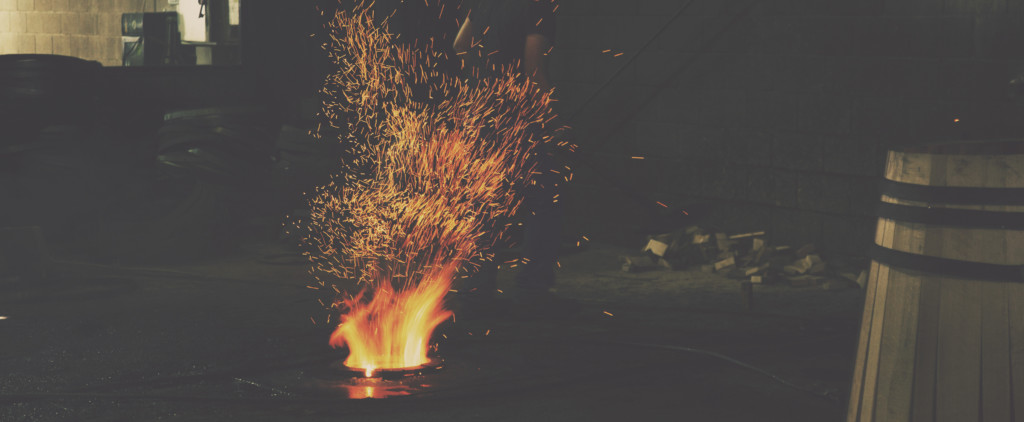
Before 1986, these barrels were mostly shipped to the UK, bottled as sherry there, and then the leftover casks would be used to mature whisky. They were plentiful, cheap, and distillers loved using them for their rich, treacly, Christmas-cake-in-a-glass style of whisky maturation. After 1986 however, these laws meant the supply of sherry casks basically choked overnight, and then shortly after in 1990 the Scotch Whisky Association (SWA, who are basically the grand whisky police) outlawed the use of artificial flavouring agents in Scotch whisky, which included paxarette, or sweetened concentrated sherry, for that purpose. This change, along with the downturn in Scotch at the time, would have created quite a tumultuous time in the trade.
Fast forward forty years to 2026, and the sherry trade is only about a fifth as big as it was back then, but the whisky trade has exploded in size and popularity. As a result, a large portion of the sherry trade in Spain basically exists to service the Scotch trade. However, with the export of full sherry casks outlawed, it meant that seasoning casks to create sherried wood spawned a whole industry behind it. That doesn’t mean we don’t see ex-bodega casks anymore (which we do, just take a look at some of our labels), but it means the supply of well-seasoned sherry casks that have had on average 18-24 months of pre-seasoning, are now more available, and people love a good sherried whisky.
Are seasoned casks better or worse than old-school bodega ones? They are more consistent, which always helps, and provide a clean, uniform, sherry profile to an interesting new make, or finish. Bodega casks are often better for finishing or extra-maturation rather than full-term. I suppose if I was to go on a “Bailey rant” here, is to utterly dispel the notion that bodega casks are in anyway superior to seasoned. In fact, given the rules around minimum maturation from the 80’s and usage of transport casks, a good case could be made that the sherry casks being produced now from this industry are far superior in their usage for whisky production than ever before.
So how do you find which whiskies are sherried in Outturn or on our site? Just because it’s sherried, doesn’t automatically mean it’ll be in our Deep Rich & Dried Fruits profile: flavour profile isn’t dictated by the cask, it’s dictated by flavour. Keep an eye out for casks like ex-Oloroso (dry sherry, often quite nutty, rich, and rounded), or ex-PX (Pedro Ximinez, a sweet sherry that gives more Christmas-cake, soaked raisins, and sweet wine notes).
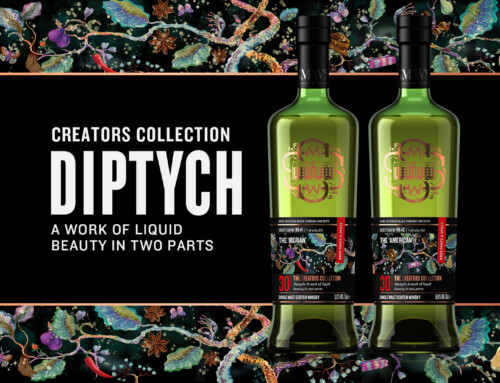
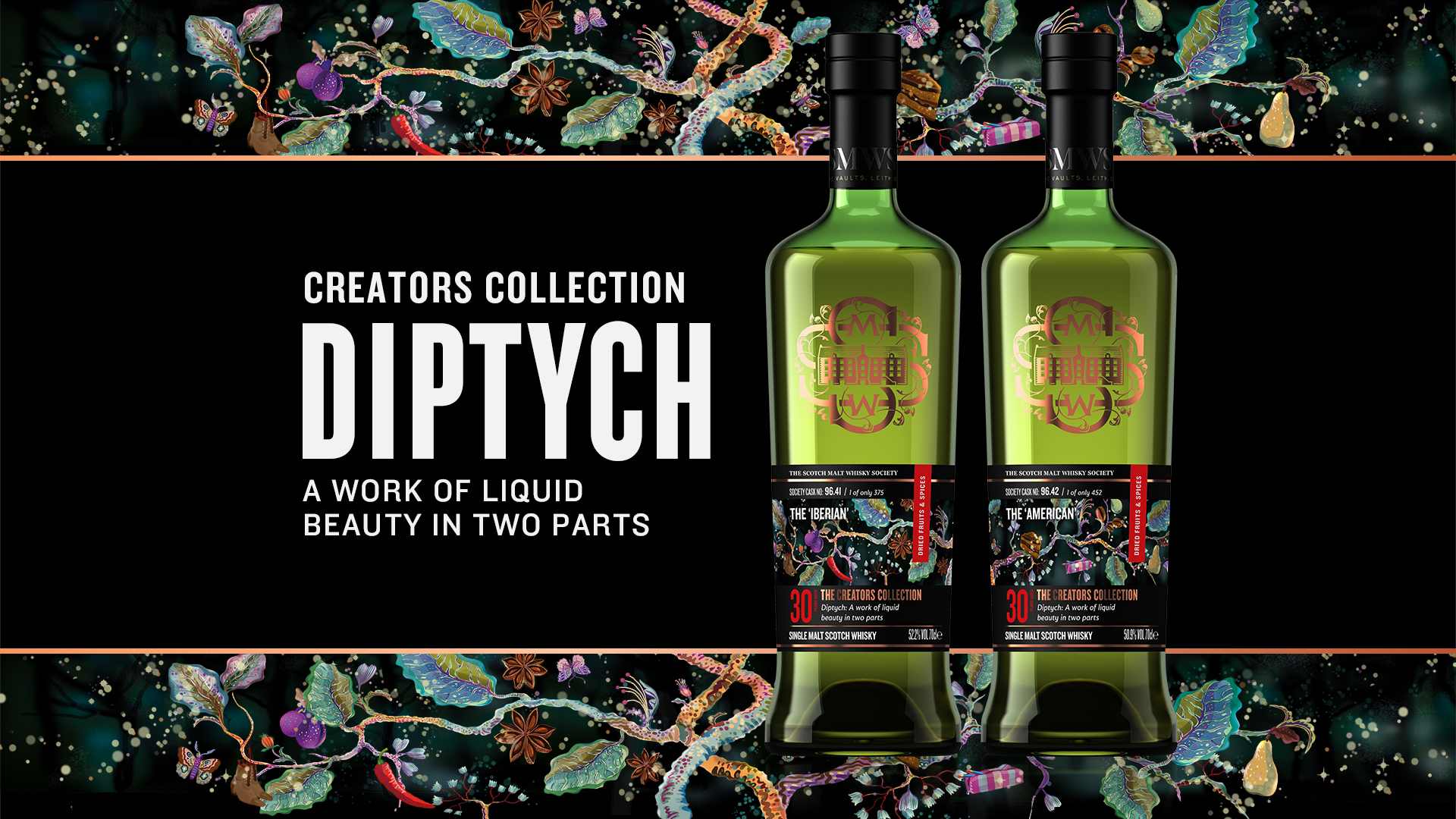
I hope this gives you a brief bit of history and insight into sherry casks, and their impact. Speaking of which, we have the Creator’s Collection Diptych being released this month: two casks from absolute superstar distillery 96, distilled on the same day in 1994, with one matured in ex-Pedro Ximinez (PX) sherry cask, and the other in an ex-Oloroso sherry cask. A fascinating side-by-side, and extremely rare allocation to get. I personally get a bit fatigued by all the “oldest this” or “exclusive that”, but in reality, I really don’t know where else you’d find 60 years of combined sherried maturation from this distillery, in one set, from two single casks… HENS TEETH. Available in Feb Outturn, on the 20th at midday AEDT.
PS: keen to learn even more about how we work with sherry casks and their impact in Scotch whisky? There’s some fantastic content on our SMWS Australia YouTube channel for precisely this.
Cheers, Matt
Managing Director, SMWS Australia